Oxford Beginnings: On Walking, Wonder, and What Comes Next
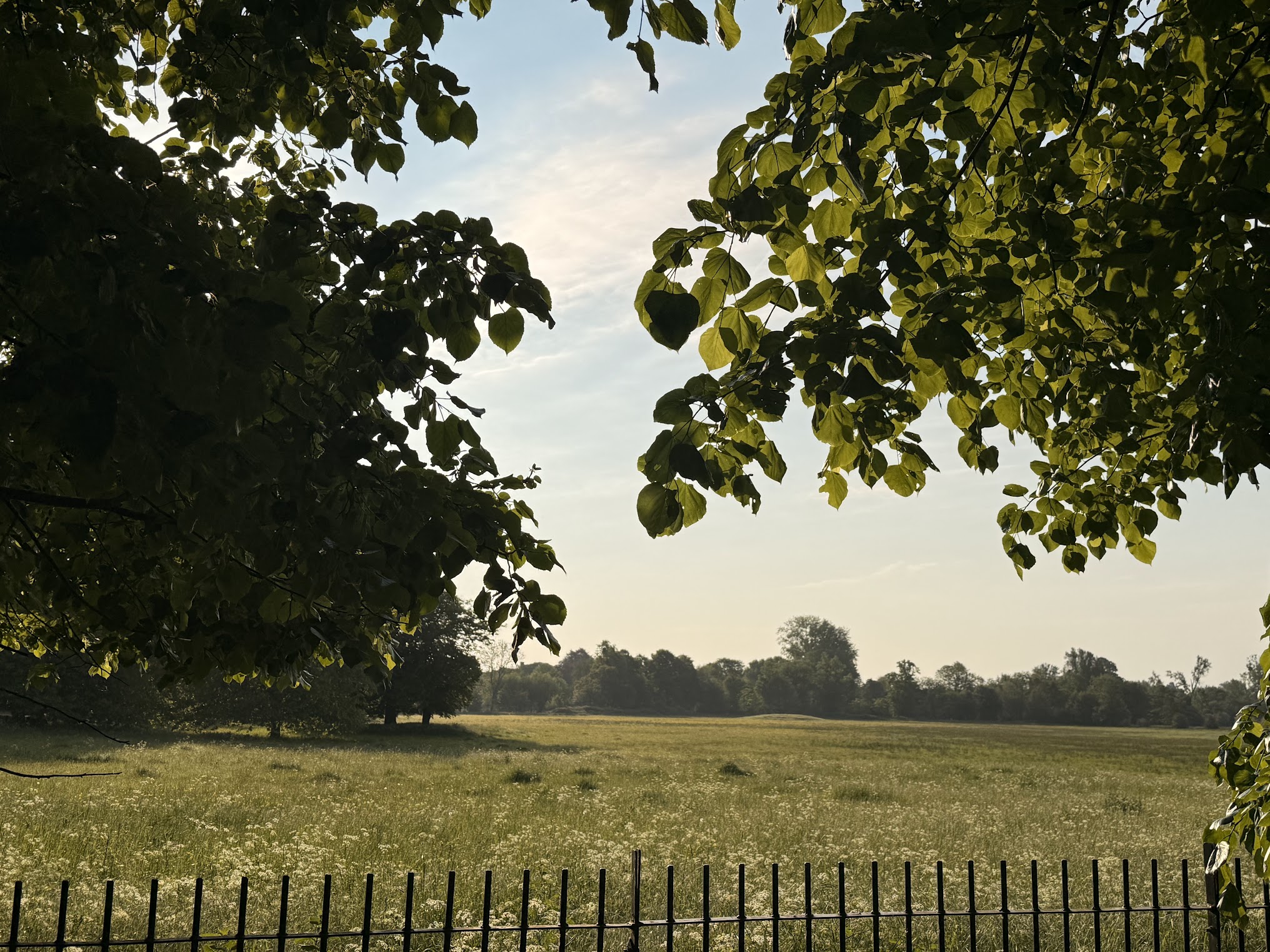
When I first reached Oxford, I had just gotten off an hour-and-a-half bus ride that gave me a glimpse of the rolling hills between London and Oxford. Throughout the bus ride, my brain instantly jumped for pieces of familiarity as the warm sun rays came through my window- did the steep rocks covered in grass remind me of the mountains of Asheville? The trees of my own hometown of Raleigh, the gusts of wind passing by on a breezy day of Wilmington? I quickly realized that my experience in Oxford, Oxfordshire, would be an amalgamation of all the places I’d been before, and yet something new and foreign entirely. I was abruptly introduced to my first lifestyle change: walking! When I began to drag my suitcases down the cobblestones near Turl St. After picking up my apartment key, I met my principal investigator bright and early on Monday morning. He said to me, “My time is my own,” and that lesson has rung true for the past month. Things on Google Maps have gone down from 14 minutes to 12 minutes to sometimes even 10 if I feel like breaking into a jog. I still measure things in miles, not kilometers, but I know what 400 grams is by instinct now from buying strawberries from Tesco, and I no longer struggle with understanding pounds and how to bag a good deal at the Covered Market.
So while I’ve saved time mastering things like asking for a cart instead of a basket or tweaking my accent for better directions, I’ve also spent a lot of time- finding new benches to sit on, spending mornings watching ducks in Christ Church meadows or sitting on the quiet windowsill of my bedroom, opened up to the recreational fields which pigeons (and sometimes even seagulls) flock about on, starting as early as 4:30 in the morning (my jet lag made me very acquainted with the birds).
Oxford isn’t my first time coding in nature. The summer before senior year, I joined Harvard Biostatistics’ StatStart program—then still online due to COVID—and learned SIR modeling on a sunny porch in Asheville. Learning and solving problems in nature is something that I deeply appreciate, although I would not have thought to vocalize this truth about myself until coming here. And even then, I didn’t realize I was planting a seed- a core value about myself- that would truly bloom here.
I believe my learning journey is a bunch of stepping stones- everything has prepared me in different ways. From the beginning of my formal research training (which would be doing the Summer Research and Innovation Program at NCSSM, also known as SRIP), the importance of an independent workflow has been heavily emphasized to me. Having the autonomy and discipline to dive into research day after day repetitively is critical to my success. But I’ve found that this week has also reignited my excitement for learning and finding a new problem with all of its intricacies to solve. I begin with a case study- “Bayesian spatiotemporal modeling”, and I have a few goals in mind, lots to read, and lots to do. And that’s where the joy of biostatistics lies for me.
But here in Oxford, this kind of biostatistics is just computer science… in some respects. Once I received my Bodleian Library card (the badge that gets you into student-only buildings, like the Radcliffe Camera “RadCam”), I realized my tasks fell into the same three buckets that have long shaped my path: reading, writing, and coding, with a lot of emphasis on the coding side.
The age-old questions of what things are called and why swirl in my mind as I come face to face with various spheres of influence. And this makes the question of what I really want to do with my life and the different axes I’m straddling all the more important, one that I hope can be answered (partially) through experiences like this summer.
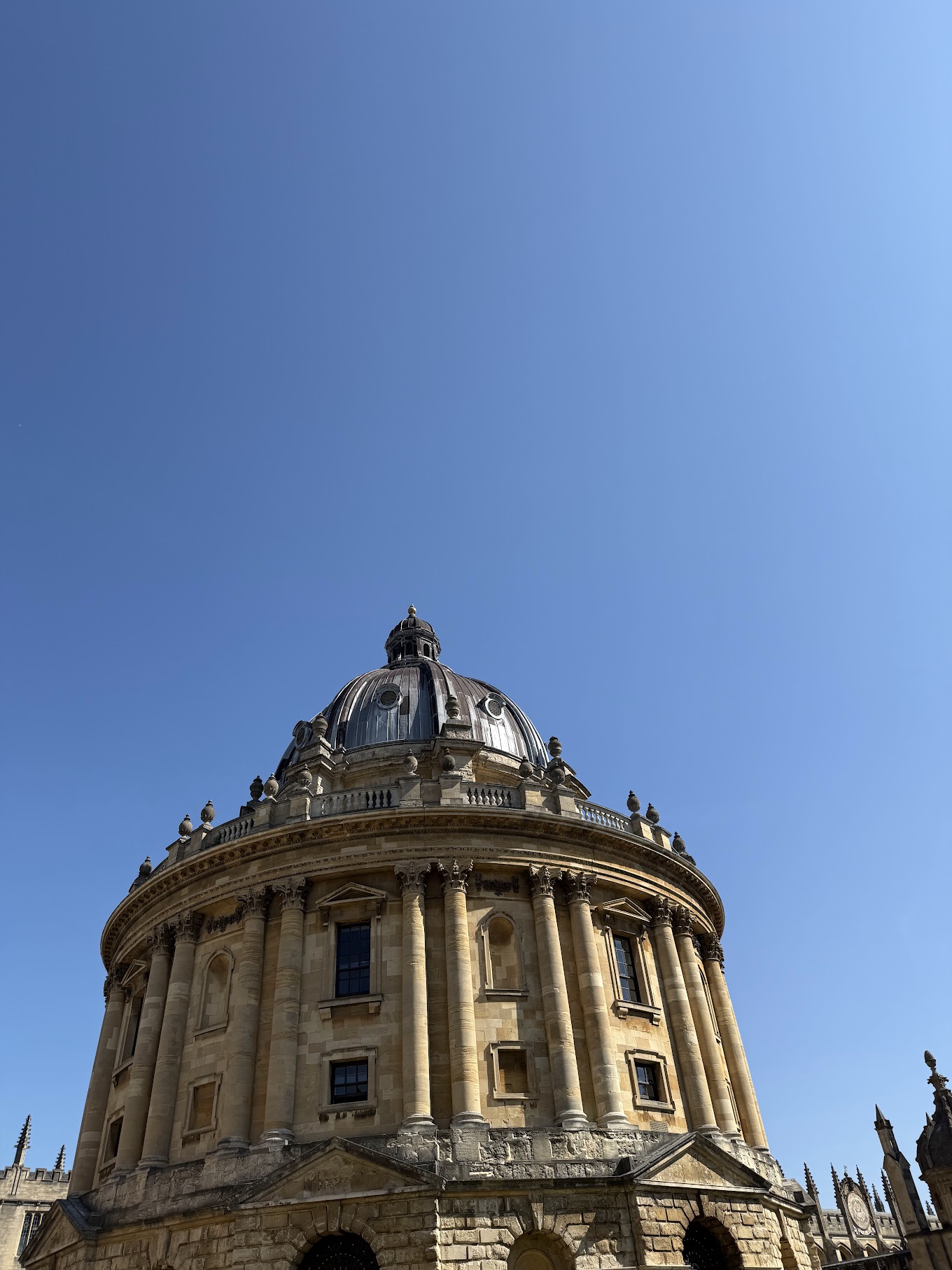
The significance of studying at the RadCam is not lost on me - I am humbled by the weight of what it means to represent my family, understand my culture, and where Oxford and the UK stand as a society still grappling with diversity and equity. I have been told many times by the wonderful role models I met at ENAR two years ago that one of the bravest things I can do as a Black female biostatistician is to take up space! And I am here in Oxford to do that, in historic libraries like the RadCam, in the seminar rooms at Jesus College and Imperial College London, and the various cafes I find to write in. Not just for myself, but for my parents who trained me to use my talents for a purpose, my grandmother and grandfather who never went to college, and help my cousin at LSE feel a bit less alone in being two members of our family living abroad and experiencing the ups and downs of our twenties.
Something that’s helped me stay connected is engaging in statistics back home- I had the chance to tune in to one of the UNC Greenberg Lectures given by Dr. Eric Tchetgen Tchetgen on nonparametric regression in statistics, which gave new ways to understand HIV and infectious disease data, which I learned a lot of new things from, one of them being a new area I might like to study as a budding biostatistician interested in infectious disease.
Over the next two weeks, I’ll be getting into variational auto-encoders (studying Elizaveta Semenova’s work on AggVAE for malaria incidence in Kenya), learning numpyro, and charting a roadmap to some of my own mini research questions and projects I could work on this summer. In the non-academic sphere of my life, I’ll be developing different routines based on Oxford’s sometimes sunny, sometimes rainy, and cold weather to maximize success and self-care, deeply engaging in the work and social culture of the university, and finding my place in this vibrant community.
As the first blog entry, this post is more reflective and less statistics-oriented, but I promise more to come!
Thanks for walking with me through these early days in Oxford. I can’t wait to share what comes next, both in my research and reflections.
Feel free to connect with me or reach out on LinkedIn.